



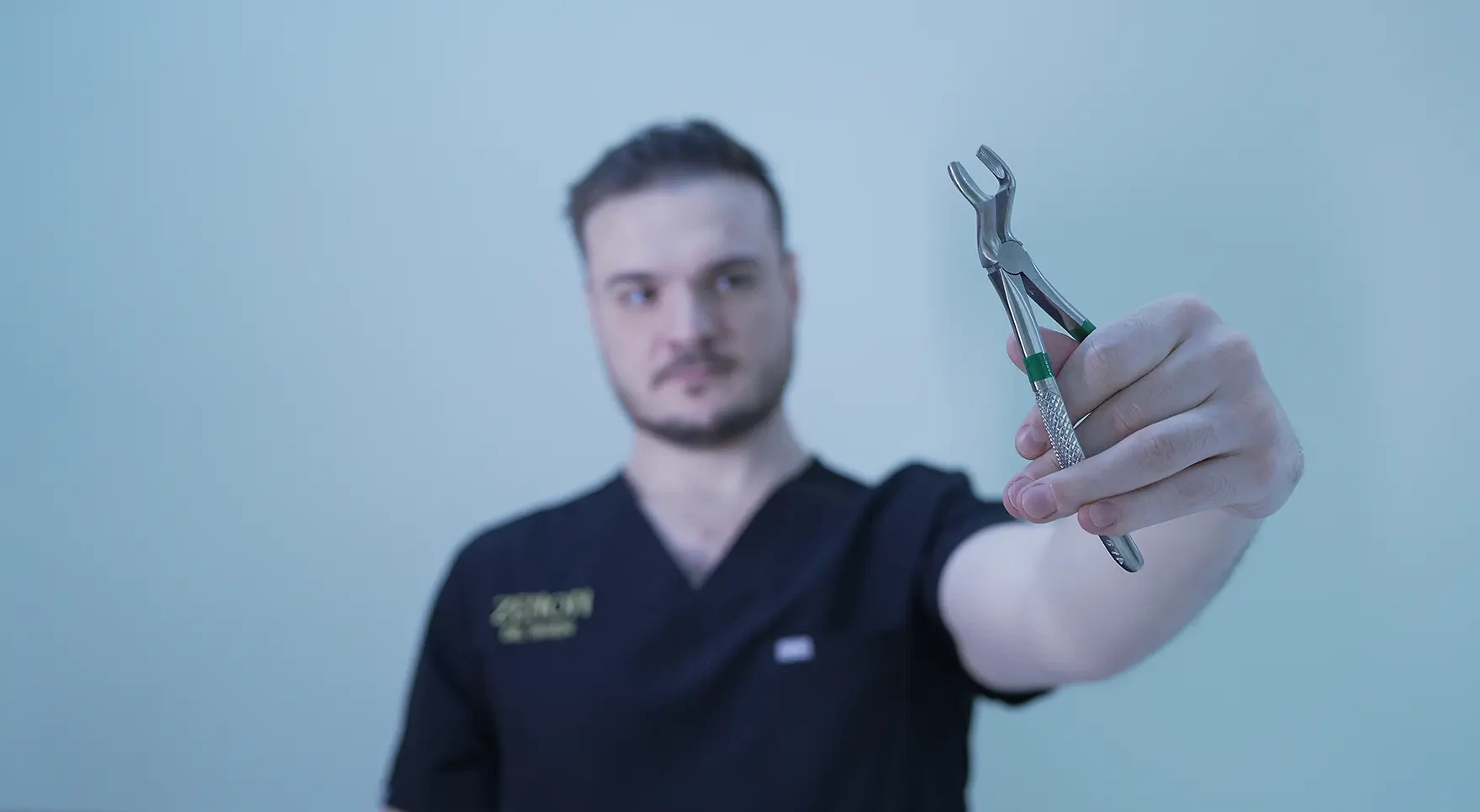
Tooth Extraction in Dubai
 340+ reviews
 4.9 on Google
- Russian-speaking, experienced doctors
- Atraumatic approach with pain-free procedures and fast healing
- Procedures performed under a dental microscope


At Zenon Dental Clinic, tooth extraction is performed using an atraumatic protocol with preliminary CBCT imaging and detailed analysis of the tooth anatomy, treatment under a dental microscope, and modern anesthesia techniques. Special attention is given to patients with dental anxiety or previous negative dental experiences. If necessary, we offer tooth extraction under sedation or general anesthesia for maximum comfort and safety.
During the initial consultation, we immediately discuss tooth replacement options, including implants with crowns or dental bridges, along with estimated treatment timelines and costs.

A specialist in complex tooth extractions with 10 years of experience. He works using modern atraumatic protocols focused on preserving bone and soft tissue while preparing the area for future implantation.

Dr. Nana (PhD in Medical Sciences, 22+ years of experience, and Diamond Apex Invisalign Provider) joins the treatment planning process if tooth extraction is required before orthodontic treatment.

Every doctor has 10–20 years of clinical experience treating complex cases and was personally selected by Dr. Nana.
Simple vs. Complex Tooth Extraction
Tooth extraction can be simple or complex — the distinction depends not on how difficult the procedure feels for the patient, but on the anatomy of the tooth, the condition of the roots and surrounding bone tissue, and the presence of inflammation.
A simple extraction is performed when the tooth is easily accessible, the crown portion is preserved, and the roots have a predictable shape. Even in these cases, the doctor works as carefully as possible: the goal is not simply to remove the tooth, but to preserve the socket walls and soft tissues for proper healing.
A complex extraction is required when the tooth is destroyed below the gum line, has curved or diverging roots, is located close to important anatomical structures (such as the maxillary sinus or trigeminal nerve), or has not fully erupted. In such cases, the tooth is often removed in sections to avoid excessive pressure on the bone and minimize trauma.
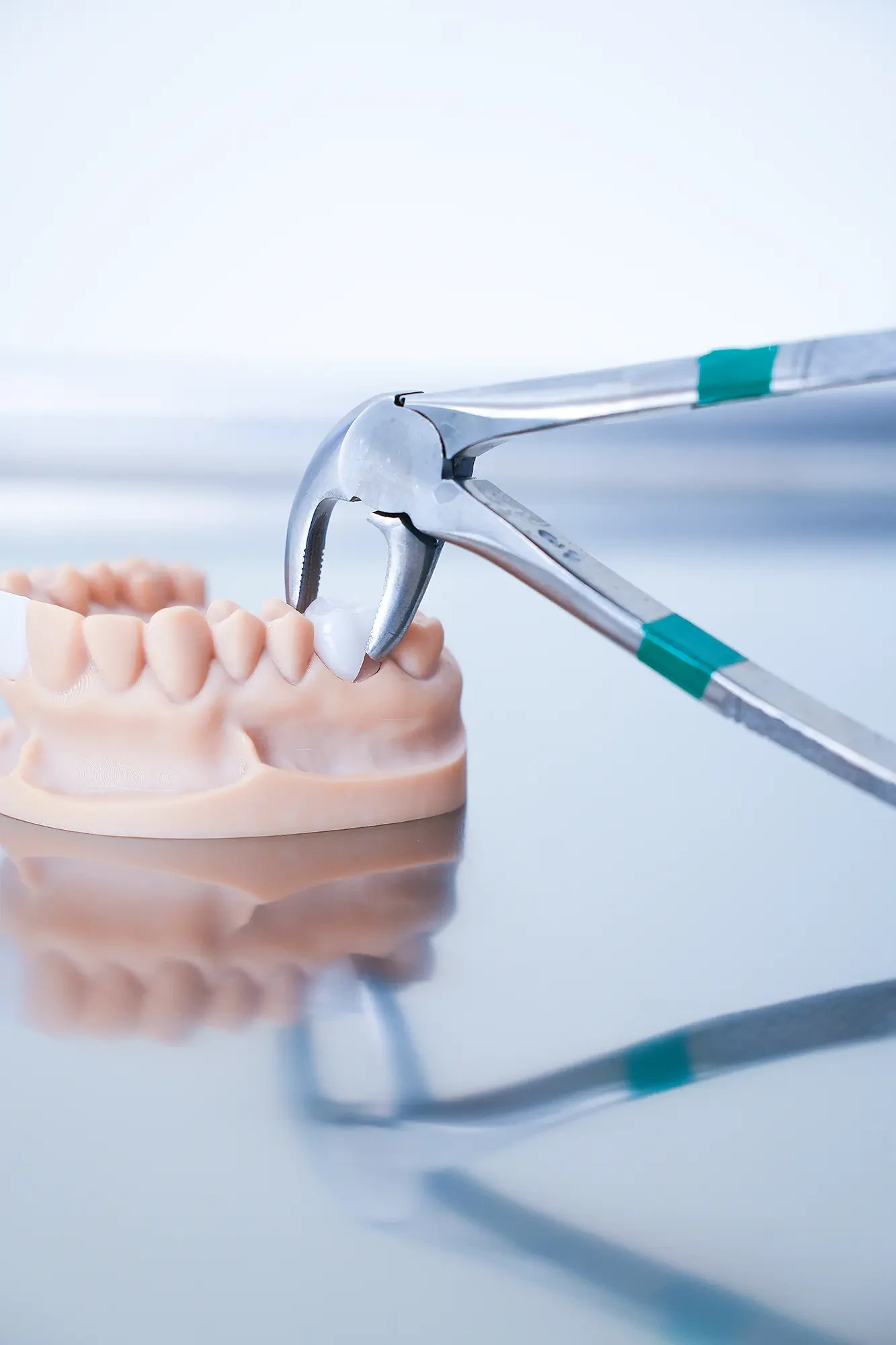
Tooth Extraction Prices
Simple tooth extraction – from 800 AED
Complex tooth extraction – from 2,000 to 2,500 AED
Tooth Extraction “While Asleep” Under Sedation
Sedation helps reduce emotional tension, allowing the patient to feel more relaxed and making the procedure easier to tolerate.
If multiple teeth need to be removed in one visit, sedation helps the patient remain comfortable throughout longer surgical procedures.
Lower stress levels can help the procedure go more smoothly and may contribute to a more comfortable recovery process.
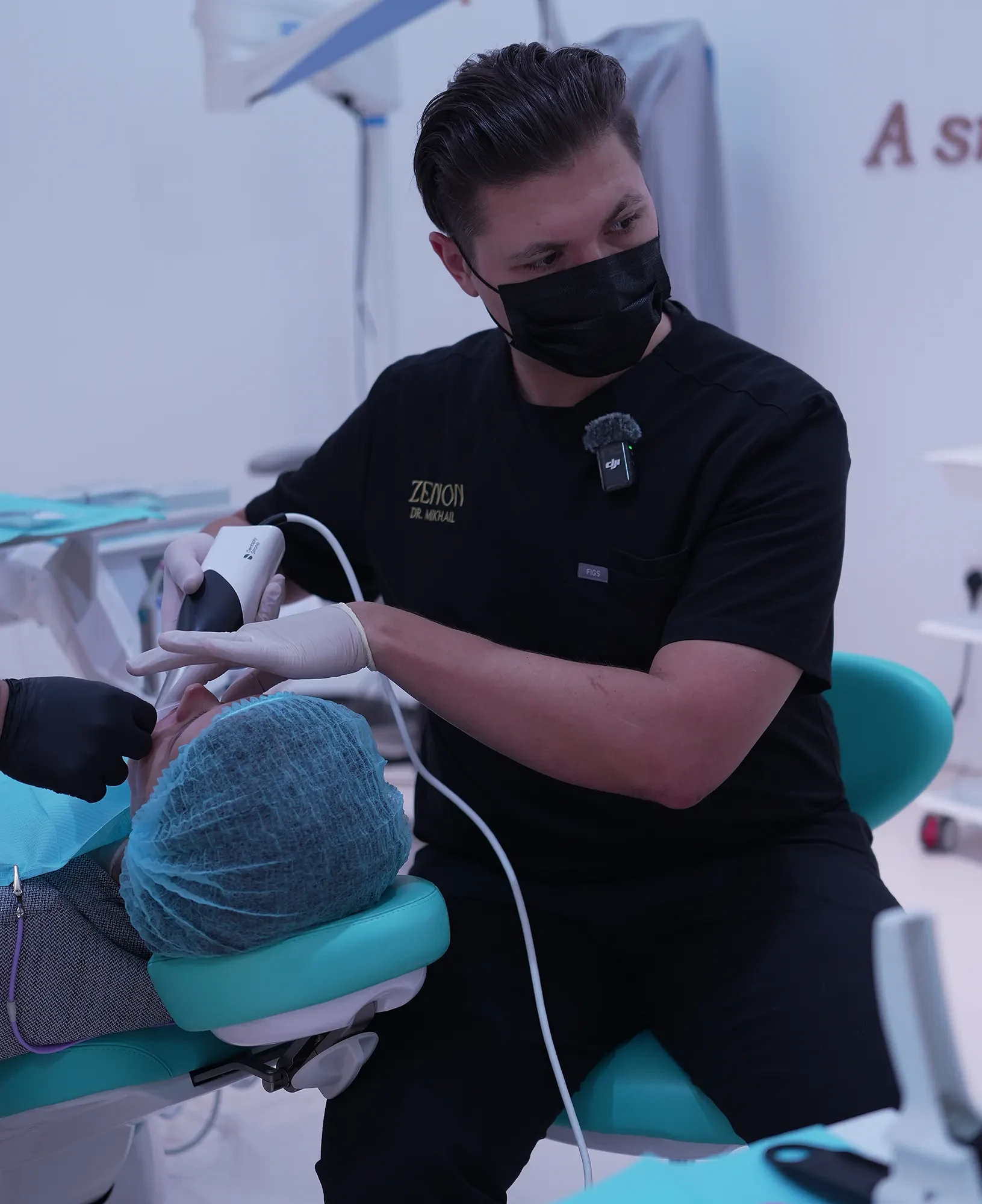
During sedation, awareness and perception of the procedure are significantly reduced, so patients usually do not retain negative memories of the treatment.
When the patient is relaxed and does not react to every action, the doctor can work more calmly, accurately, and gently.
Sedation increases the overall cost of treatment, as it requires the involvement of an anesthesiologist and additional patient monitoring.
Doctor’s Advice
Oral Surgeon, 8+ years of experience
«I am not only a surgeon, but also an implantologist. This means I always think not only about removing the tooth, but also about how to properly restore it immediately afterward. In many cases, I can perform immediate implantation — placing the implant immediately after extraction and attaching a temporary crown. The patient does not remain without a tooth even for a single day.
At Zenon Dental Clinic, we work as a team. This means the result is evaluated not only from a surgical perspective, but also from a functional one: how the bite will function after implant placement, how chewing forces will be distributed, and how stable the result will be in the long term.»
Reviews
340+ reviews, 4.9 on Google Maps
See all our reviews22 Apr 2025

30 Mar 2025
29 Jun 2025
23 Jul 2025
12 Aug 2025
20 Jan 2026
10 Dec 2025
28 Feb 2026

Our Approach



Book a Consultation
Consultations are conducted by doctors with 10–20 years of experience. Comprehensive diagnostics, including CBCT, and a personalized treatment plan — all in one visit.
 Meet Our Doctors
We will match you with the right specialist: orthodontist, general dentist, or surgeon.
 +971 4 286 7747
Write to us on WhatsApp or call us
within 15 minutes
 Complex cases are handled by Dr. Nana, an Invisalign speaker in Dubai
get the rest free.
How the Initial Consultation Works?
The initial consultation is not just an examination or an answer to the question, “Does the tooth need to be removed?” It is a comprehensive diagnostic appointment where the surgeon determines whether the tooth can be saved — and if not, how to perform the extraction safely and what the best restoration option will be afterward.
The surgeon performs a visual examination of the oral cavity, evaluating the condition of the tooth and gums, the degree of destruction, the presence of inflammation, tooth mobility, and the condition of neighboring teeth. The goal is to determine whether extraction is truly necessary or whether the tooth can still be preserved.
A CBCT scan is mandatory. The surgeon evaluates:
- the number and shape of the roots;
- root direction;
- thickness of the bone walls;
- proximity to the nerve;
- proximity to the maxillary sinus;
- presence of inflammation around the root;
- bone volume for possible implantation.
Zenon Dental Clinic uses one of the most advanced CBCT systems available, providing highly detailed imaging of the dental system, TMJ, skull, and cervical spine with minimal radiation exposure. There are only two such systems in the UAE: one at Zenon Dental Clinic and the second at the University of Sharjah.
During the consultation, the patient immediately learns how the extraction will be performed and what the estimated cost will be. The surgeon may also discuss restoration options, including implants with crowns or dental bridges.
The patient receives a clear treatment plan outlining how the extraction will proceed, the expected cost, whether immediate restoration is possible, and which options are best suited for their case.
Stages of Tooth Extraction
At Zenon Dental Clinic, tooth extraction follows a carefully developed protocol — for us, it is a routine daily procedure refined down to the smallest details.
At the first stage, the doctor performs a visual examination and analyzes the CBCT scan results. This allows the surgeon to assess the anatomy of the tooth and surrounding tissues in advance.
The surgeon determines:
- how severely the tooth is damaged;
- whether the tooth can be saved;
- root position and anatomy;
- presence of inflammation;
- proximity to the nerve or sinus;
- whether immediate implantation is possible;
- whether bone grafting or soft tissue work will be required.
At this stage, the doctor selects the extraction strategy. For example, if the roots have a complex shape, it may be safer to divide the tooth into fragments and remove it section by section. If implantation is planned, preserving the socket walls becomes especially important.
The doctor explains whether the extraction will be simple or complex, whether sedation is needed, how long the procedure will take, and what restoration options are available.
Before the procedure, local anesthesia is administered. If the patient experiences anxiety or a complex procedure is planned, sedation may be recommended.
The goal of this stage is to ensure complete comfort and create optimal conditions for surgical work.
The surgeon performs the extraction under magnification, which is a key element of the atraumatic approach.
The dental microscope allows the doctor to clearly see:
- the border between the tooth and bone;
- the condition of the socket walls;
- root direction;
- microcracks and tooth fragments;
- areas of inflamed tissue.
Magnification allows the surgeon to work more precisely and gently, which is especially important when the tooth is severely damaged, has complex roots, or when tissue preservation is required for future implantation.
After extraction, the doctor cleans the socket of inflamed tissue and evaluates its condition. If implantation is planned, the surgeon assesses whether there is sufficient bone volume and adequate stability for implant placement.
The wound is then carefully closed with sutures to stabilize the soft tissues, protect the socket, and create optimal healing conditions.
Interdisciplinary Approach
At Zenon Dental Clinic, tooth extraction is never viewed separately from future restoration. If the patient requires prosthetics, implantation, bite correction, or TMJ treatment, all specialists work together within one clinic according to a unified treatment plan.
This is especially important in complex cases, where extraction is performed not simply because of tooth destruction, but as part of comprehensive rehabilitation, orthodontic treatment, implant preparation, or bite restoration.
A team approach helps avoid situations where one doctor removes the tooth, another later plans the implant, and a third tries to adapt the prosthetics to already compromised conditions. At Zenon Dental Clinic, treatment planning begins with the final result in mind.
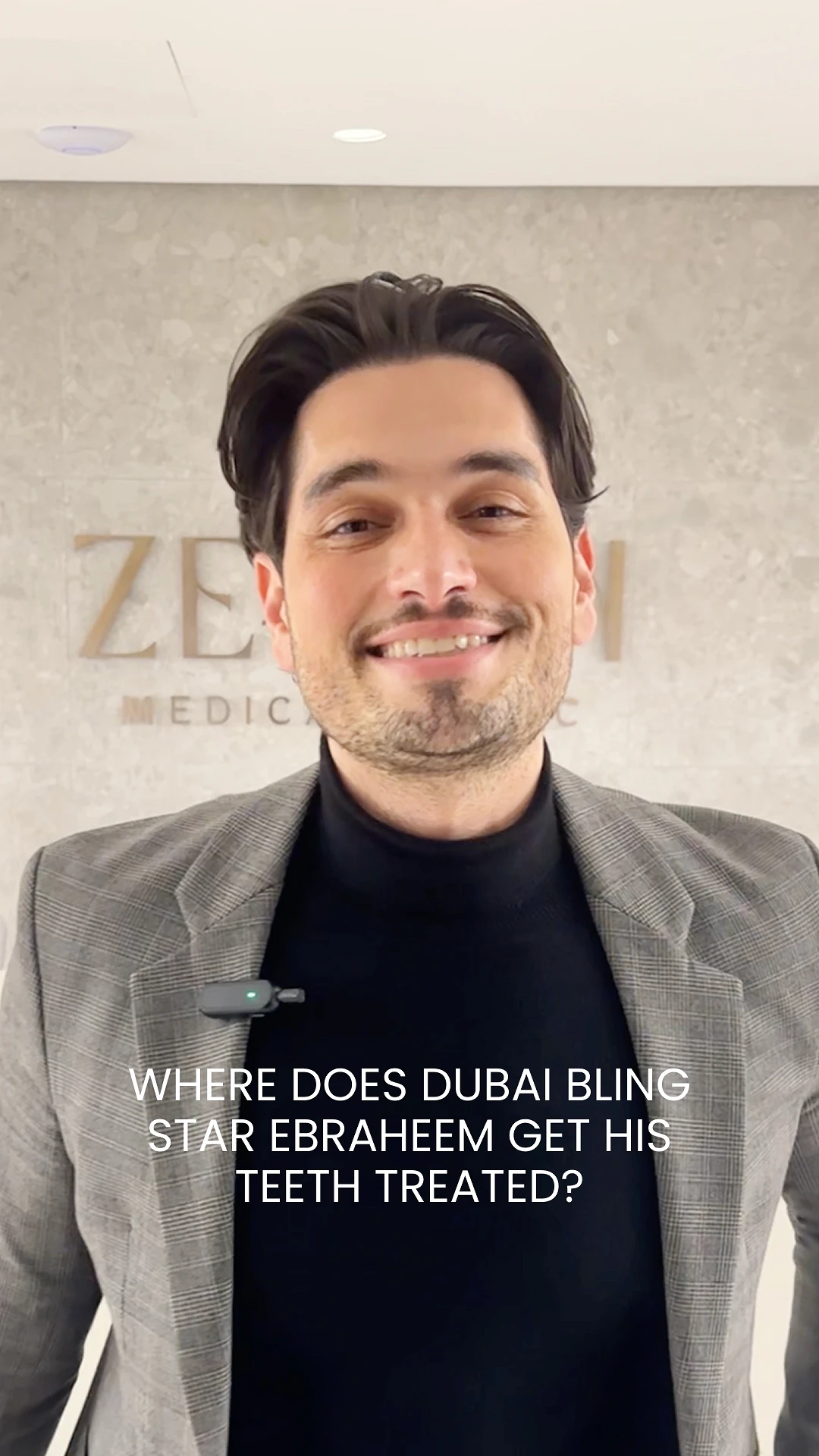
Chosen by Those Who Expect the Best
Among our patients are public figures and international experts who value impeccable quality, confidentiality, and premium-level service.

Reviews
Tooth Extraction According to International Standards
At Zenon Dental Clinic, tooth extraction is not just a surgical procedure — it is part of a carefully planned treatment strategy. We assess risks in advance, choose minimally traumatic techniques, and clearly understand how function will be restored afterward.
For us, international standards mean precise diagnostics, an atraumatic approach, preservation of bone and soft tissues, and a clear long-term treatment plan.
Before extraction, the doctor evaluates not only the tooth itself, but also the surrounding anatomical structures: root shape and position, bone volume, gum condition, neighboring teeth, and proximity to nerves or the maxillary sinus.
For this purpose, a CBCT scan is performed — a 3D diagnostic method that allows the surgeon to plan the procedure in advance. The doctor understands whether the extraction will be simple or complex, whether the tooth should be sectioned, and whether immediate implantation is possible.
This approach helps avoid unexpected complications and makes the procedure more predictable.
The clinic uses a dental microscope, allowing the surgeon to work more precisely and carefully. Under magnification, the boundaries of the tooth, bone walls, root fragments, and surrounding soft tissues are clearly visible.
The main goal is to remove the tooth not “by force,” but as gently as possible, minimizing trauma to the bone and gums. If necessary, the tooth is carefully divided into sections and removed gradually.
After extraction, preserving the natural bone volume and gum contour is extremely important. This directly affects healing predictability and future aesthetic outcomes.
That is why the doctor avoids excessive pressure and traumatic techniques. If necessary, the tooth is carefully sectioned and removed step by step to minimize damage to the surrounding tissues.
Tooth extraction should not leave the patient uncertain about the future. Before the procedure, the doctor discusses restoration options, including implants, bridges, or temporary solutions.
If clinical conditions allow, immediate implantation can be performed — the implant is placed directly after extraction. If this is not safe, the doctor explains why a delayed approach may be the better option.
Indications and Contraindications
- the tooth is severely damaged and cannot be restored;
- chronic inflammation around the root;
- cyst or granuloma;
- dental trauma;
- the tooth interferes with orthodontic treatment;
- impacted or improperly positioned wisdom tooth;
- the tooth is a source of pain or infection;
- preparation for implantation or prosthetic treatment is required.
Preparation may be required before extraction if the patient has:
- acute inflammation;
- exacerbation of chronic diseases;
- uncontrolled blood pressure;
- blood clotting disorders;
- pregnancy;
- use of certain medications that may affect healing or bleeding.
If a tooth can be saved — we save it. Extraction is performed only when restoration is impossible, unsafe, or unlikely to provide a predictable long-term result.

Rehabilitation and Aftercare
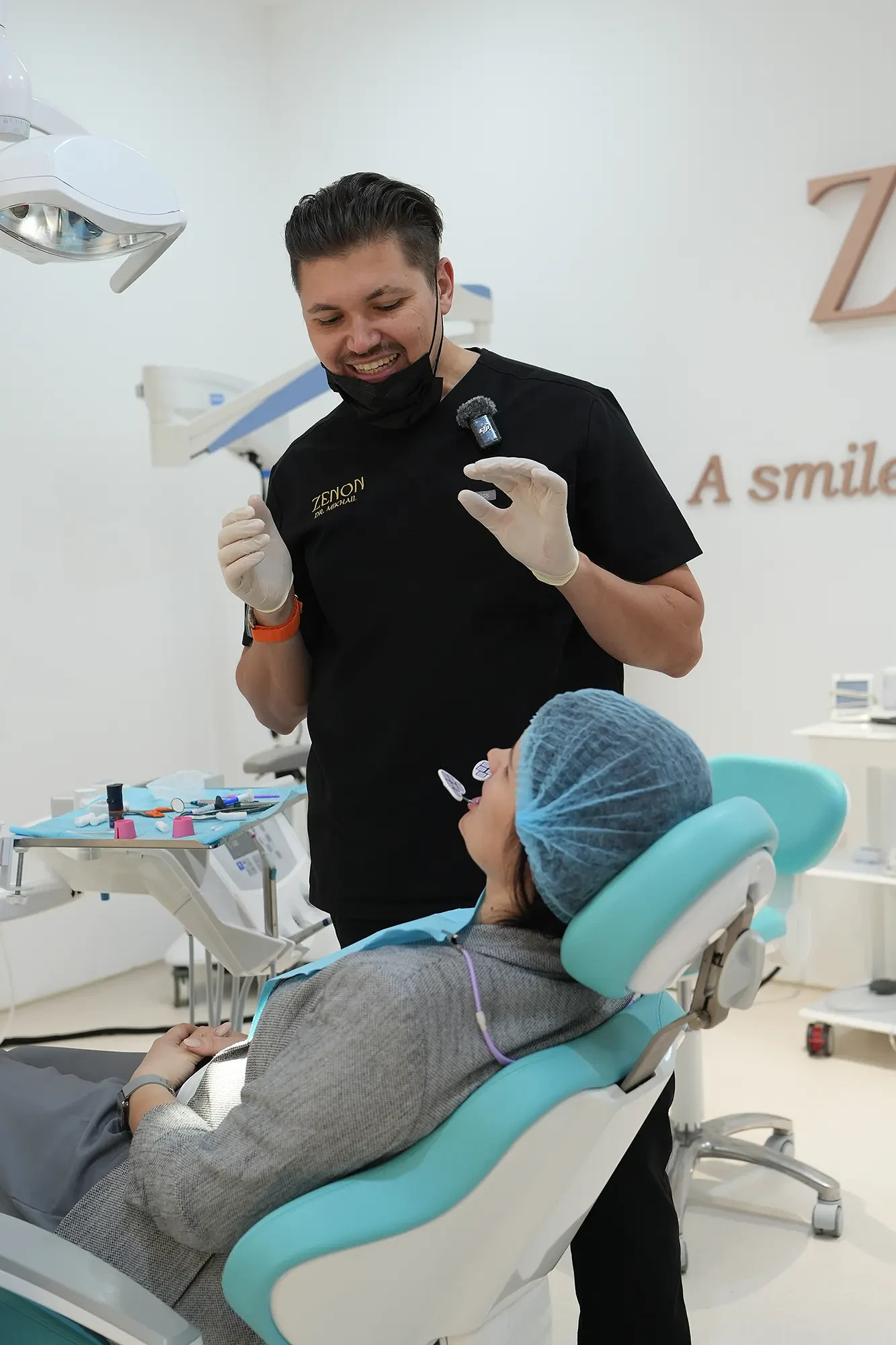
After extraction, it is important not only to wait for healing, but to go through the recovery period correctly. The first few days play a major role in how smoothly and predictably the tissues heal.
Primary healing usually takes up to 7 days. During this period, a blood clot forms, the wound surface closes, and sensitivity gradually decreases.
What Is Important
- follow the doctor’s recommendations;
- take prescribed medications;
- brush teeth carefully without traumatizing the extraction site;
- eat soft, non-hot foods;
- attend follow-up appointments;
- monitor overall well-being.
What Should Be Avoided
- vigorous rinsing during the first 24 hours;
- touching the socket with the tongue or hands;
- eating hot food;
- visiting saunas or steam rooms;
- intense physical activity;
- smoking during the first days after extraction;
- discontinuing prescribed medications without consulting the doctor.
Proper rehabilitation helps tissues heal calmly and creates the best conditions for future tooth restoration.
FAQ
Will tooth extraction hurt?
How long does recovery take?
Can a tooth be removed and an implant placed immediately?
What is better after extraction — an implant or a bridge?
Will I remain without a tooth after extraction?
Why is a CBCT scan needed before extraction?
Why is extraction under a dental microscope better?
Zenon Dental Clinic on the Map
We are always happy to welcome you!
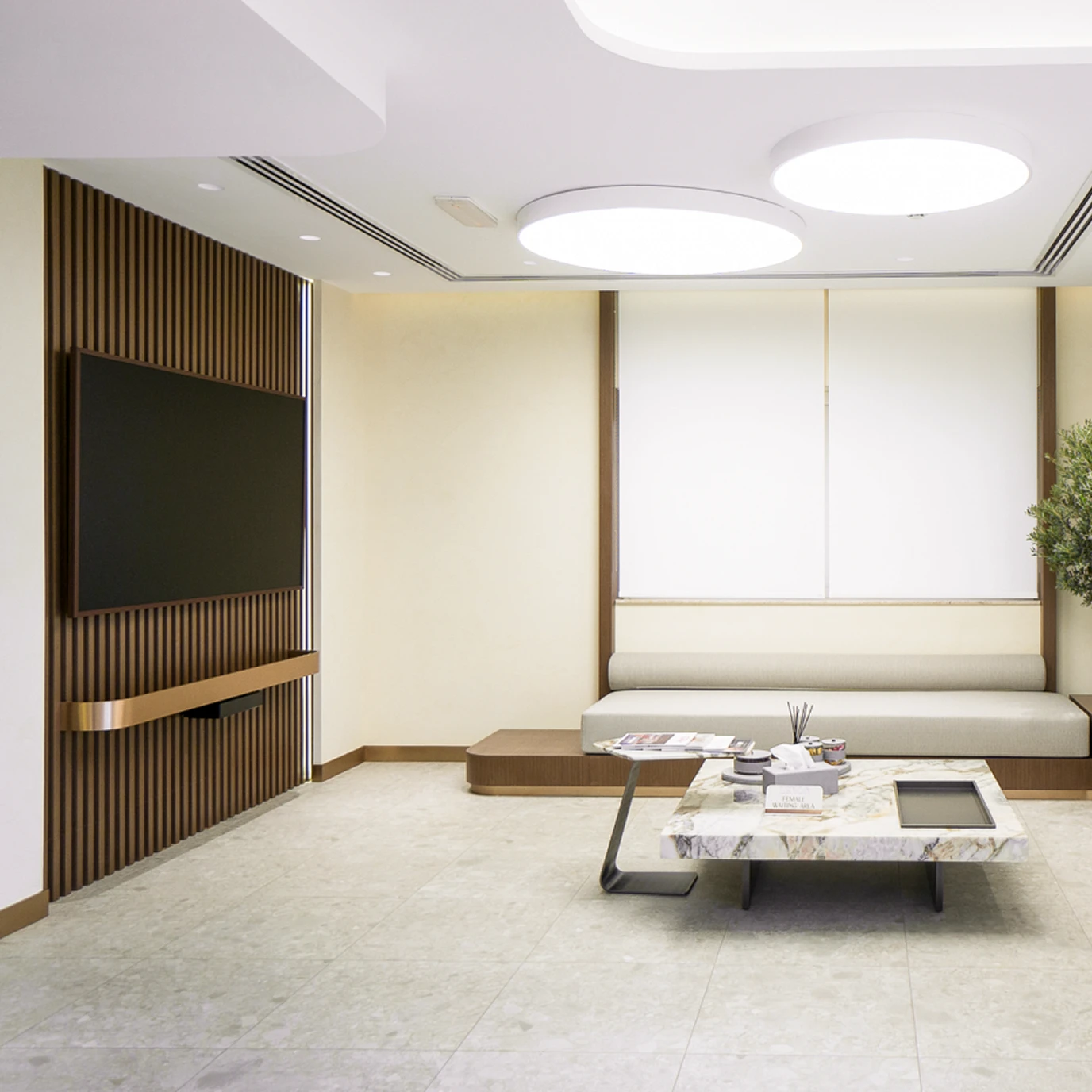
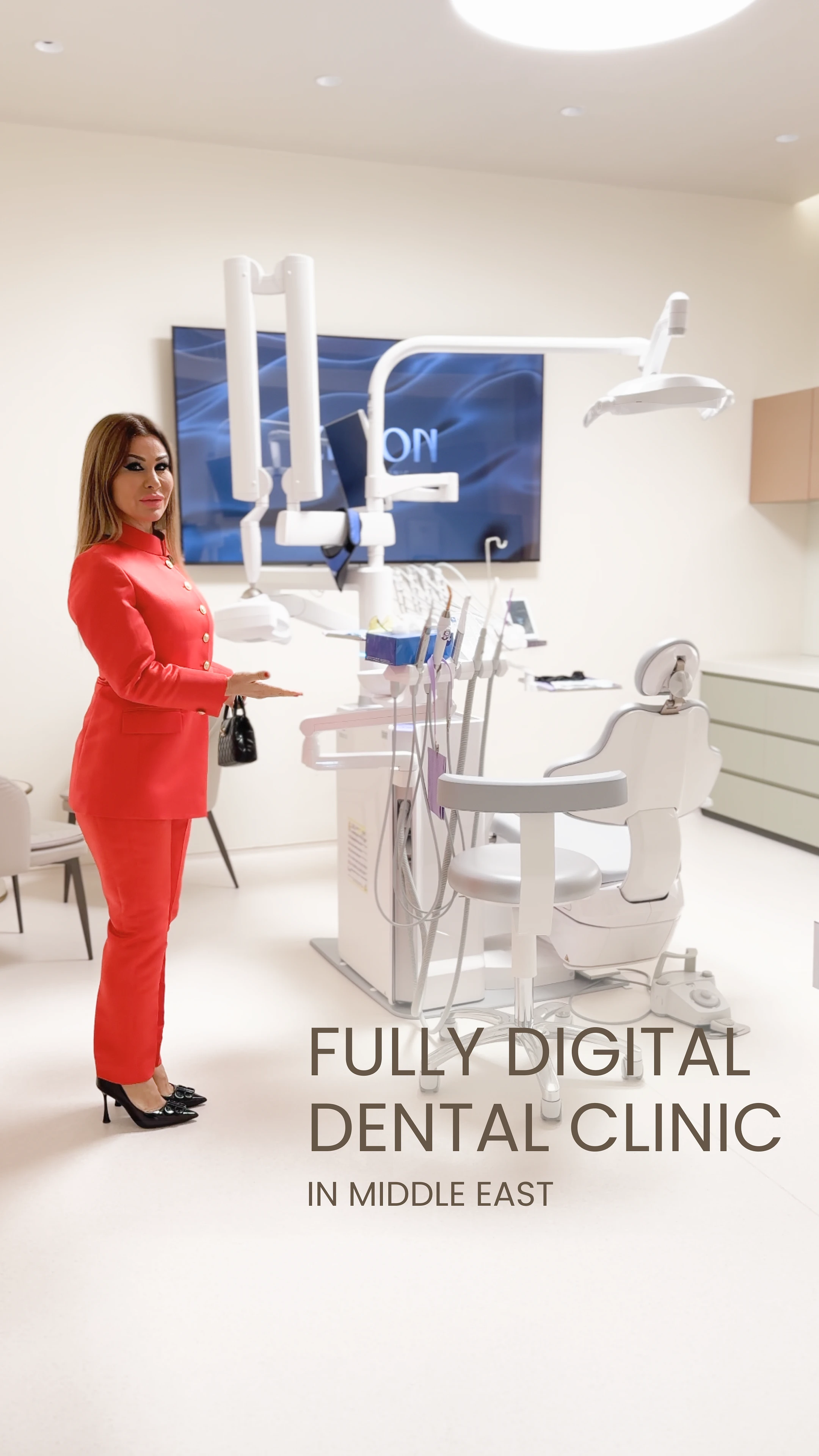
A calm, welcoming space where every detail is thoughtfully designed
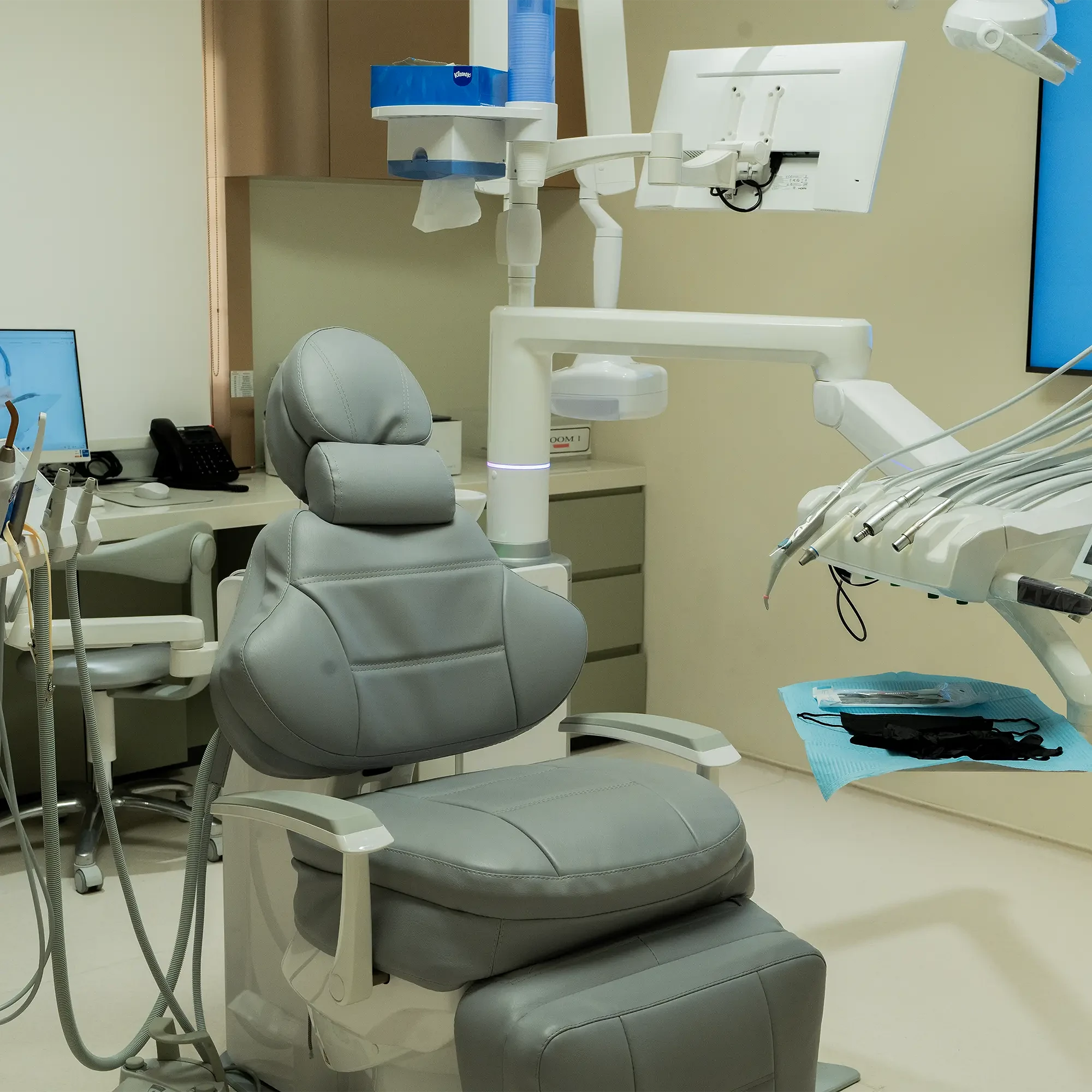
Equipped with the latest digital diagnostic and treatment technology